
Regulatory Update
ERP to FTA e-Invoicing Readiness for Enterprises in UAE
UAE e-invoicing is no longer a distant regulatory discussion; it’s quickly becoming a board-level priority for large enterprises. As the Ministry of Finance advances the national e-invoicing framework, organizations are being pushed to rethink how invoices move from ERP systems to the Federal Tax Authority (FTA).
For enterprises running SAP, Oracle, or multiple ERPs across business units, the question is not whether they need to prepare, but how prepared their invoicing systems really are.
01
Why ERP Readiness Is the Real Starting Point
Most enterprises assume e-invoicing is an external compliance exercise, something that happens after an invoice leaves the ERP. In reality, ERP readiness defines compliance success or failure.
ERPs were designed to generate invoices for internal accounting and operational needs, not for:
- Real-time tax reporting.
- Structured invoice exchange.
- Regulatory validation and traceability.
- What works for finance teams today may not work when invoices become part of a regulated digital exchange ecosystem.
02
The Hidden Complexity of SAP, Oracle, and Multi-ERP Environments
Enterprise invoicing environments are rarely simple.
A typical organization may operate:
- SAP for core finance
- Oracle for legacy entities or acquisitions
- Regional ERPs or custom billing platforms
- Industry-specific invoicing systems tied to operations
- Each system generates invoices differently, uses different tax logic, and stores data in different formats. When UAE e-invoicing enters the picture, these differences become compliance risks.
The challenge isn’t creating invoices; it’s creating consistent, compliant, and exchange-ready invoices across systems.
03
Why "Just Integrate with FTA" Is a Risky Assumption
One of the most common misconceptions enterprises have is that ERP systems can simply “connect” to the FTA when required.
In reality:
- Regulatory models introduce new validation rules.
- Invoice data must meet strict structural requirements.
- Transmission requires secure, auditable channels.
- Errors must be handled without disrupting ERP operations.
Direct ERP-to-authority connections often lead to:
- Excessive customization.
- Fragile integrations.
- High dependency on ERP upgrade cycles.
This is where many enterprises underestimate the scope and cost of readiness.
04
From ERP to FTA: What Enterprises Need to Think About Now
Instead of asking “How do we comply?”, leading enterprises are asking better questions:
- How do we enable e-invoicing without changing core ERP logic?
- How do we manage multiple ERPs with one compliance strategy?
- How do we stay flexible as UAE regulations evolve?
- How do we avoid rebuilding integrations for every new mandate?
- These questions point toward architecture and strategy, not just technology.
05
Why This Matters Beyond Compliance
UAE e-invoicing will touch more than tax teams.
It impacts:
- Finance operations and billing cycles.
- IT architecture and integration strategy.
- Data governance and audit readiness.
- Business continuity during peak invoice volumes.
- Enterprises that approach e-invoicing as a last-minute compliance task risk process disruption and visibility gaps. Those who prepare early gain clarity, control, and confidence.
06
What This Webinar Will Unpack (That This Blog Won't)
This blog intentionally doesn’t go into implementation details, because that’s where most enterprises get stuck.
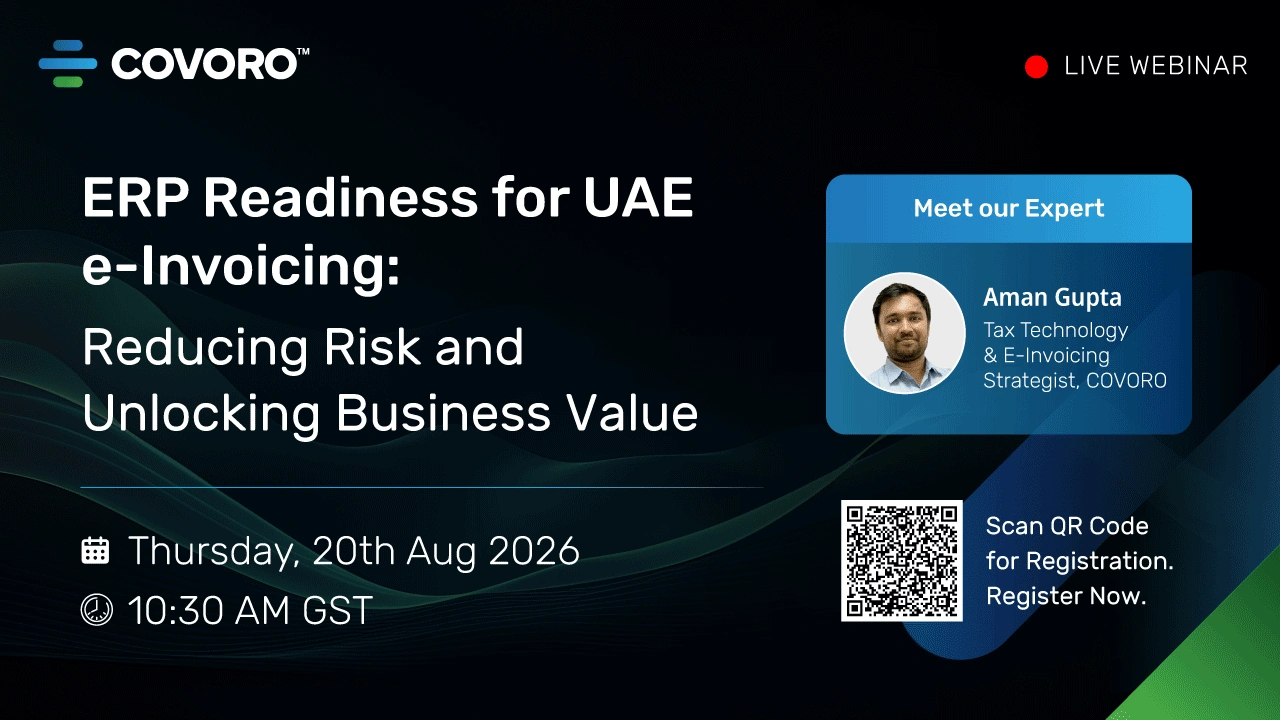
In the webinar “From ERP to FTA: Making Enterprise Invoicing Systems e-Invoicing Ready”, we will explore:
- What UAE e-invoicing readiness really means for SAP and Oracle users.
- How enterprises can enable e-invoicing across multi-ERP environments.
- Common architectural mistakes enterprises make, and how to avoid them.
- How to prepare today without locking into rigid, short-term solutions.
- If your organization relies on complex ERP landscapes, this conversation is not optional, it’s timely.
07
Final Thought
UAE e-invoicing is not about replacing ERP systems. It’s about making them regulation-ready, scalable, and future-proof.
The journey from ERP to FTA isn’t a straight line, and enterprises that recognize this early will be the ones that transition smoothly when mandates take effect.
Join our upcoming webinar to understand what readiness really looks like, and how to approach it strategically.
Categories
Table of Contents
About the Author

Juhi Dubey
I am a semi-qualified CA with 4 years of experience in Accounts and finance. With a background in law and a passion for tax compliance, I have been deeply engaged in the Fin-Tech industry, composing insightful content. I am fond of writing and have contributed articles on accounting, personal finance, income tax, and GST.
Found this useful?
Share it with a click.
Agentic AI-Powered Compliance
Ready for UAE E-Invoicing? We are.
Explore how COVORO helps CFOs lead — not just comply.
You might also like